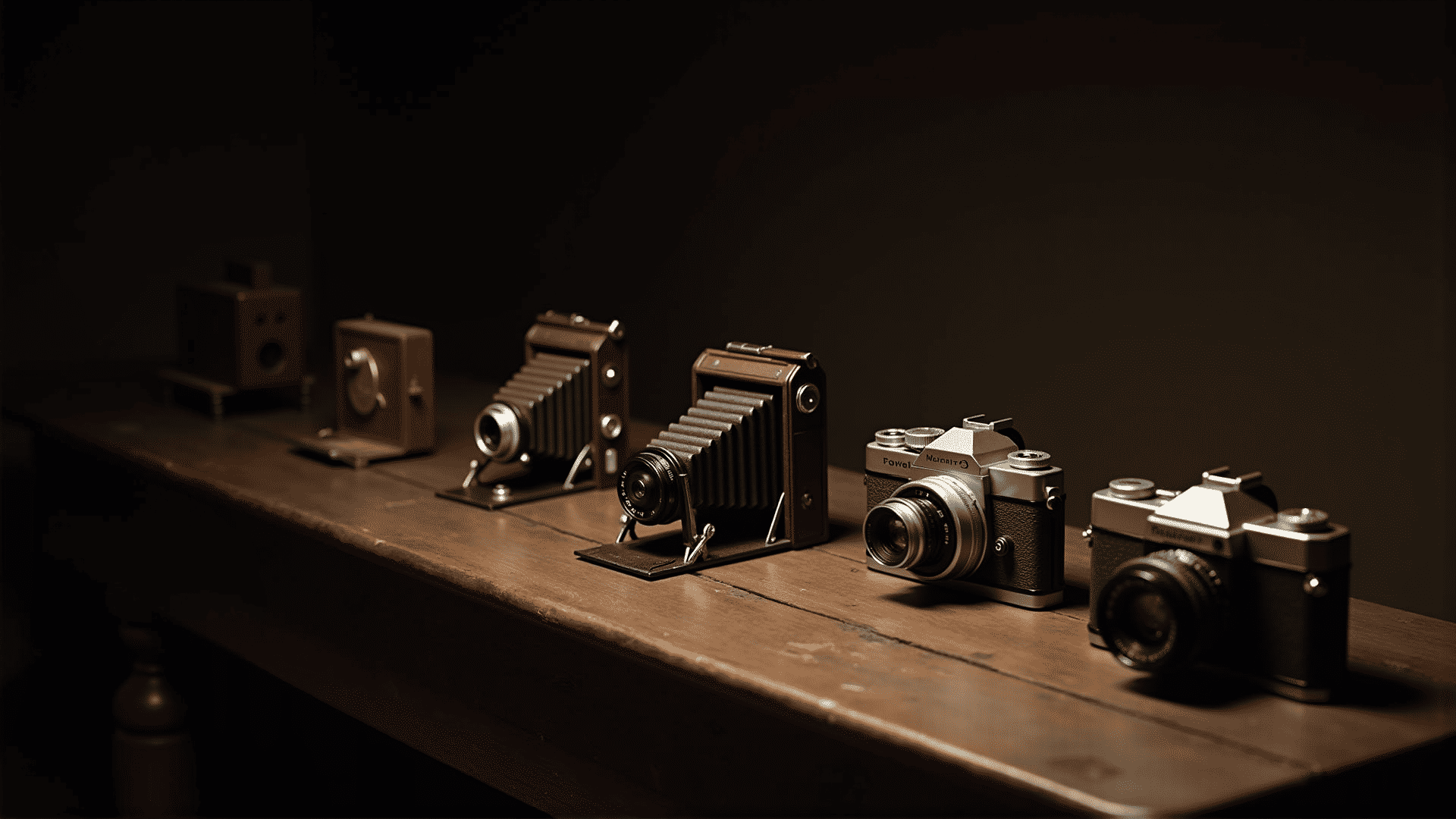
The journey of photography is a remarkable chronicle of technological and artistic development, depicting how capturing images has transformed over the decades. The camera's evolution sees a series of leaps from rudimentary designs to today's sophisticated digital marvels.
The inception of photography can be traced back to the ancient pinhole camera. Known as the "camera obscura," this simple yet ingenious device lacked a lens but used a small hole to project an inverted image of the outside world onto a surface inside a dark room. Although this contraption didn’t capture images permanently, it laid the groundwork for future advancements.
In the early 19th century, the technological landscape saw significant developments with the introduction of the daguerreotype. This first publicly announced photographic process, developed by Louis Daguerre, used a silvered plate and required daguerreotype studios to produce a single, highly detailed image. It was an immediate success and spurred popular interest in creating and preserving images.
The late 1800s brought about the invention of film cameras, which revolutionized how photographs were taken and viewed. George Eastman's invention of the Kodak camera in 1888 drastically changed photography by making it accessible to the general public. The simplicity of the Kodak camera, combined with roll film, allowed anyone to take photographs easily and have them developed externally.
Fast forward to the mid-20th century, and we see the emergence of single-lens reflex (SLR) cameras, which offered photographers more control over the image-making process. These cameras became popular among professionals and hobbyists alike, as they allowed users to see exactly what the lens would capture through a mirror and prism system.
With the dawn of the digital age in the latter part of the 20th century, digital cameras started to replace film as the medium of choice. These devices brought a seismic shift in how images were stored and shared, moving from physical prints to digital files. Digital cameras offered instant feedback, eliminating the wait to develop and print photos. They also enabled limitless experimentation and creativity, as unwanted images could simply be deleted.
Today, the smartphone era represents the latest chapter in the evolution of cameras. With high-quality sensors packed into small devices, photographic technology is now carried in millions of pockets. This accessibility, combined with social media platforms, has transformed photography into a global pastime, opening up personal expression to billions of people worldwide.
The history of photography showcases not only technological innovation but also a profound cultural shift. From preserving moments in time to enabling new forms of artistic expression, the evolution of the camera is intertwined with how we see and share the world around us. Undoubtedly, as technology continues to progress, the future holds even more exciting possibilities for this ever-evolving art form.